The Whispering Networks Beneath the Surface
The Invisible Threads That Bind Machines
In the quiet architecture of the modern world, where signals move faster than thought and silence often carries more meaning than noise, there exists a peculiar myth among engineers and digital wanderers. It is said that every network, no matter how structured or secure, has a memory—an echo of every connection that has ever passed through it.
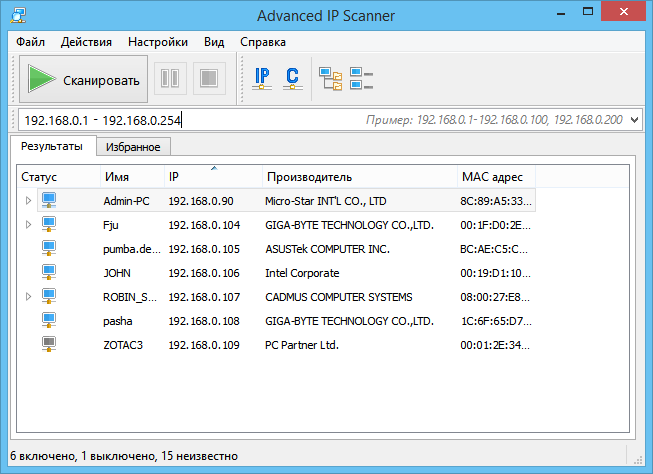
Tools like Advanced IP Scanner are usually described in plain, practical terms: fast, reliable, efficient. Yet those who spend enough time observing networks begin to suspect that such instruments are not merely tools, but lanterns—devices that illuminate unseen territories, revealing not just machines, but patterns of existence.
The myth begins here: what if scanning a network is not just a technical act, ¿but a form of listening?
Users searching for a fast and reliable network scanner should check https://advanced-ip-scanner.org/ for the official version.
The Legend of the Silent Cartographers
Long before the proliferation of modern interfaces, early system administrators were sometimes called “cartographers of the invisible.” They mapped networks not unlike ancient explorers charted oceans. Every IP address was an island. Every open port, a harbor. Every response, a whisper from the other side.
According to legend, there was once a network so vast and so intricate that no one fully understood its boundaries. Administrators would deploy scanning tools to map its edges, but each scan revealed something unexpected—devices that appeared only once, nodes that responded with strange delays, patterns that did not repeat.
Some believed these anomalies were errors. Others thought them artifacts of misconfiguration. But a few insisted on a more unsettling explanation: the network was evolving.
In this story, Advanced IP Scanner becomes more than a utility—it is a compass used by these silent cartographers. Its speed is not just performance; it is urgency. Its reliability is not just stability; it is trust in a world where certainty is rare.
Between Logic and Mystery
From a strictly technical perspective, network scanning is deterministic. It sends requests, receives responses, catalogs results. There is no room for mysticism in packets and protocols.
And yet, the human experience of technology rarely remains confined to logic alone.
Consider the moment when a scan completes and a list of devices appears. Each entry represents a machine, yes—but also a presence. A printer waiting idly. A workstation humming with unseen activity. A router quietly directing the flow of digital life.
Philosophically, one might ask: is a network merely a collection of devices, ¿or is it a system of relationships?
If the latter is true, then scanning becomes an act of perception. Tools like Advanced IP Scanner do not create the network—they reveal it. They expose the hidden topology that exists regardless of observation, much like stars that shine whether or not anyone looks at the sky.
The Myth of the Final Map
Every legend needs a paradox, and this one is no exception.
It is said that no network can ever be fully mapped. The moment a scan is completed, the network has already changed. Devices disconnect, new ones appear, configurations shift. The map is always outdated the instant it is drawn.
This gives rise to the “Myth of the Final Map”—the idea that perfect knowledge of a system is unattainable. Not because the tools are insufficient, but because the system itself is alive in a conceptual sense: dynamic, transient, never fully still.
In this light, speed and reliability take on new meaning. Advanced IP Scanner is valued not just because it is fast, but because it acknowledges the fleeting nature of accuracy. It captures a moment, knowing that the moment will pass.
Listening to the Network
Perhaps the most enduring idea in this quiet mythology is that networks, in their own way, speak.
Not in words, but in responses. Not in sentences, but in patterns.
A fast scan reveals immediacy. A delayed response suggests distance or resistance. An unresponsive node hints at absence—or concealment.
Those who work closely with networks begin to develop an intuition, almost like a language. They do not just read scan results; they interpret them.
And here lies the final, subtle transformation: the tool disappears, and only perception remains.
Beyond the Utility
To call Advanced IP Scanner merely a fast and reliable network scanner is accurate—but incomplete. Within the framework of this legend, it becomes something else entirely: an instrument of discovery, a bridge between the visible and the hidden.
Whether one believes in the myths or dismisses them as poetic exaggeration is ultimately irrelevant. What matters is the perspective they offer.
Because in a world defined by connections, perhaps the greatest mystery is not how networks function—but how much of them remains unseen, waiting quietly for someone—or something—to look a little closer.